 Percussion Lock
Percussion Lock
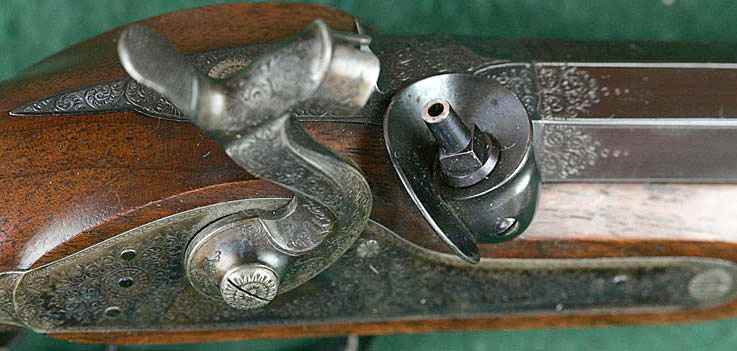
Percussion lock, cocked, awaiting placement of the percussion cap onto the nipple.
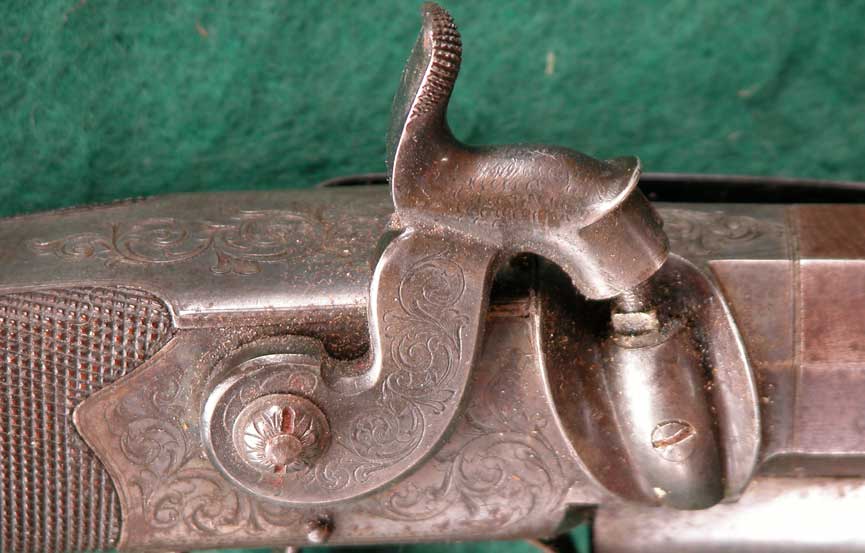
Percussion lock in the fired position.
Percussion Lock - Based on a discovery by the Rev. Alexander Forsyth, patented in 1807, that a blow to fulminate of mercury will detonate it, through several designs to utilize the concept with limited success, culminating in the adoption of the copper priming cap. After the hammer is cocked, a small, cup-shaped cap, containing a bit of impact-sensitive fulminate, is placed upside-down on the tubular-conical nipple. To fire the gun, one pulls the trigger, releasing the spring-loaded hammer which falls on the head of the percussion cap, detonating the fulminate, sending fire through the hole in the nipple to the main charge inside the breech (having been loaded from the muzzle) touching it off and discharging the weapon. The percussion system superseded the flintlock system generally around 1820 because it was more reliable in the wind and the rain, quicker to load, of faster lock time and because it was cheaper to manufacture
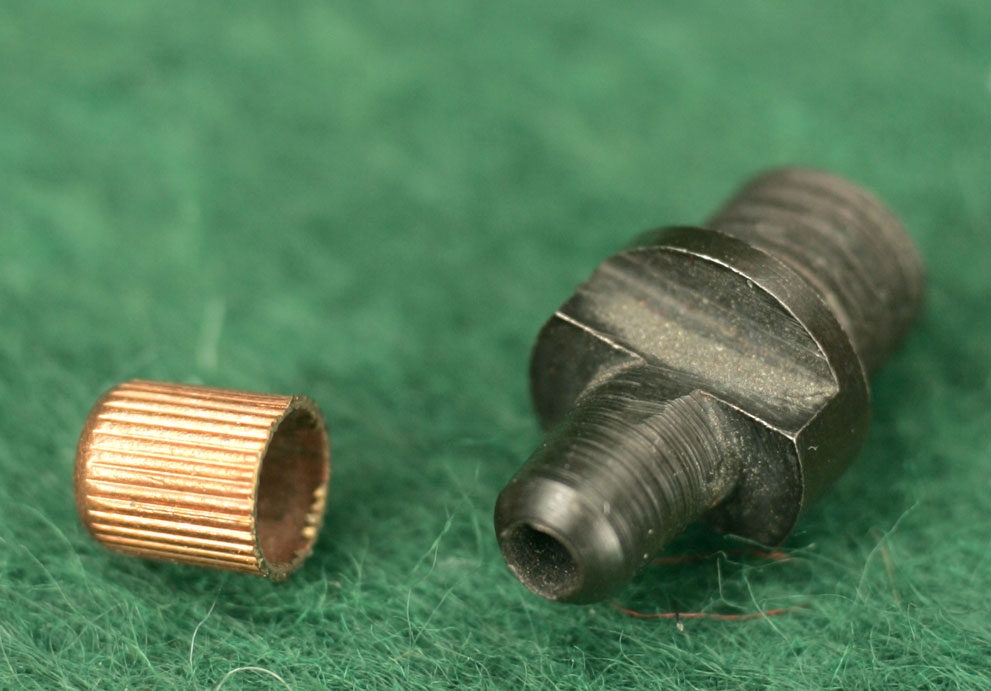
Copper Percussion Priming cap with fulminate inside. Percussion nipple, removed from action.
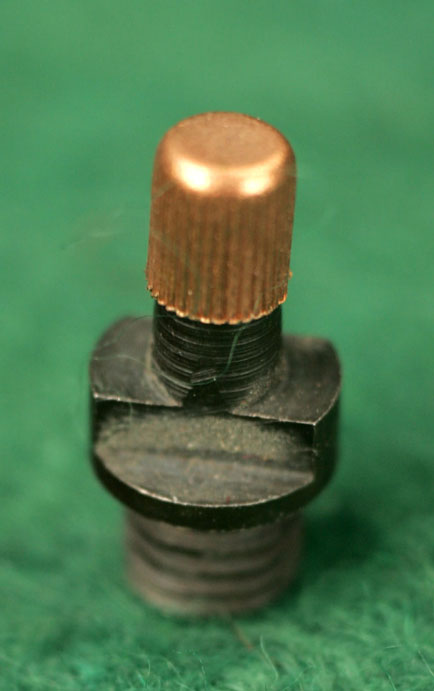
Priming Cap in place on nipple.
See a Summary of the development of firearms ignition systems.
The Hallowell & Co. Illustrated Firearms Dictionary is for informational purposes only. We do not necessarily offer the items described above for sale. Please click on any of the links below to see what we actually do have available for purchase.
American Shotguns English Shotguns European Shotguns Double Rifles Magazine Rifles Single Shot Rifles Combination Guns
Winchester Colt Smith & Wesson Other Handguns Antique Guns New Arrivals Custom Knives Other Neat Stuff
Who We Are How to Order We want to buy your Gun(s) Recommended Links Historical Gallery
Firearms Definitions, Abbreviations & Opinions Store Photos Magazine Articles Home
Hallowell & Co., Inc. PO Box 1445. Livingston, Montana 59047 USA Tel: 406 222-4770 Fax: 406 222-4792 Email: morris@hallowellco.com
Hours: Tuesday - Saturday, 10 - 6. (Mountain Time) Our inventory is constantly changing. Please bookmark this site and return often.